

Insights
In-depth research and data-driven insights on quantitative finance, factor investing, risk, and ESG from the TEJ research team.
Trending
Editor's picks from our research desk.

Fundamental Factor Research: Monthly Revenue Information – part1
The Taiwan equity market possesses a rare institutional advantage globally: under the Securities and Exchange Act, listed companies are required to announce and report their operational results for the preceding month by the 10th of each month (Exception: starting from FY2026, insurance companies and entities with insurance subsidiaries may extend their disclosure deadline to the 15th of each month). This is commonly referred to in the market as "Monthly Revenue".
Factor Strategy – Integrating Broker Consensus to Enhance Foreign Concentration Strategies – QFII Part 2
Boost your quantitative strategy with QFII concentration & broker consensus! Discover how the conc_qfii fusion strategy delivers a 30.12% annualized return in the Taiwan large-cap market.
Factor Research – Tracking Smart Money Footprints via Foreign Institutional Concentration – QFII Part 1
Track QFII ‘smart money’ footprints in Taiwan large-cap stocks! Learn how the Foreign-Institutional Trading Concentration (conc_qfii) factor predicts returns.
Insights
Browse all articles by topic.
 Market Knowledge & Data Guides
What Is Odd Lot Trading? TEJ Guides You Through The Basics From The Ground Up
Odd lot trading is all about buying and selling smaller amounts of stock that don’t add up to a full trading unit (usually 1,000 shares). So, instead of needing a lot of money to buy a full unit at once, you can start with a smaller amount of shares. This is super handy for anyone with a limited budget who still wants to get into stock investing!
 Quant Research
SuperTrend Strategy: Buy Low, Sell High to Profit from Market Swings
The SuperTrend Indicator is a technical analysis tool used to identify trends in financial markets. It assists investors in determining relative high and low points during market swings, helping them make buy and sell decisions. However, one drawback of the SuperTrend Indicator is its tendency to be less effective during consolidation phases. To address this, we will use the Average Directional Index (ADX) to optimize the SuperTrend strategy in this article.
 Quant Data Science
What is a Stock API? A Guide to Quickly Acquiring Taiwan Stock Market Information Using Financial Tools
No matter which brokerage app you use, you can view the historical trading information and real-time market data of various securities on the app. This allows investors to make informed investment decisions based on accurate information. This is possible because the Stock API facilitates smooth data transmission between the market trading system and the brokerage app. In this article, we will introduce what a Stock API is and highlight the three most commonly used Taiwan Stock Market APIs, providing valuable references for investors.
 Market Knowledge & Data Guides
What is ESG Data? Its Importance and Key Categories
ESG data is crucial for data-driven decisions, which is why we will focus on its benefits and provide a guide on how to collect ESG data for reports.
 Market Knowledge & Data Guides
Alternative Data Explained for Smarter Investing Decisions
Alternative data refers to information from non-traditional sources. This article will explore its advantages and how it can optimize financial decisions.
 Market Knowledge & Data Guides
How to Search Data on the Market Observation Post System? Comprehensive Guide to the New Features of the Updated Market Observation Post System
Whether you’re a seasoned expert in the stock market or a beginner just starting to invest, you might be curious about where many stock analysts get their “company information.” Most of this data is obtained from the Taiwan Stock Exchange (TWSE) website and the Market Observation Post System (MOPS). This includes financial statements, the number of issued shares for listed companies, recent dividend distributions, and more. You can even receive real-time updates on significant announcements from listed companies. It’s one of the must-visit websites for investors! As for why the Market Observation Post System exists and how to use its features and functions, let TEJ (Taiwan Economic Journal) explain it all to you!
 Quant Data Science
How to Use Python for Algorithmic Trading? A Guide to Understanding the Benefits and Operation of Algorithmic Trading
This article will introduce algorithmic trading with Python, the benefits of using the Python programming language for financial trading, and how to apply it to financial transactions, allowing investors to harness the power of technology to build their ideal investment portfolios.
 Quant Data Science
Verifying LSTM Stock Price Prediction Effectiveness Using TQuant Lab (Part 2)
In the first article—Verifying LSTM Stock Price Prediction Effectiveness Using TQuant Lab (Part 1)—we compared the predicted data with the actual data to conduct an initial evaluation of the performance of two trained models (for stocks 2618 and 8615). The results were promising. For a more detailed analysis, you can click the link above to learn more, as we will not go into further details here due to space constraints.
 Market Knowledge & Data Guides
What is Algorithmic Trading? A Beginner’s Guide to Algorithmic Trading, Including Tutorials, Pros and Cons, and Common Strategies.
If you’ve been involved in investing for some time, you’ve likely heard a lot about algorithmic trading and quantitative trading strategies. For beginners with no software or coding background, it might seem daunting at first. However, with the rise of AI in recent years, the ability to automate investment strategies could become an essential tool […]
 Factor Investing
Stock Selection Factor Study: A Study Combining brokers branches trading and Momentum Factors
When market efficiency is low or inefficient, stock prices tend to overreact or underreact to new information. This phenomenon allows investors to achieve significant positive average returns by buying stocks that have performed well in the past or short-selling stocks that have performed poorly (Jegadeesh and Titman, 1993). From a behavioral finance perspective, George and Hwang (2004) pointed out that traders might be reluctant to buy even if there is favorable news when stock prices approach a new high within the past year. This reluctance leads to stock prices reaching new highs driven by positive news, indicating that even professional investors might underreact to new information. Zhang (2006) found from an information asymmetry perspective that in markets with a higher degree of information asymmetry, future returns of stocks following bad or good news tend to be lower or higher, respectively. Momentum strategies perform better in stocks with higher levels of information asymmetry. This study attempts to use the daily reports of brokers branches trading provided by the Taiwan Stock Exchange to derive relevant indicators from an information asymmetry perspective, combining these with momentum factors to identify stocks that have yet to catch the market’s attention but are gradually rising in price. The study will conduct overlapping period tests, IC/IR value tests, and factor portfolio backtesting on this composite factor.
Quant Data Science
Verifying LSTM Stock Price Prediction Effectiveness Using TQuant Lab (Part 1)
This article uses the LSTM time series model for deep learning-based LSTM stock price prediction, utilizing the opening, high, low, and closing prices of the past five days, quarterly ROE, MOM (indicating the magnitude of price trend changes, and the direction of market trends), and RSI indicators to predict the next day’s closing price.
 Market Knowledge & Data Guides
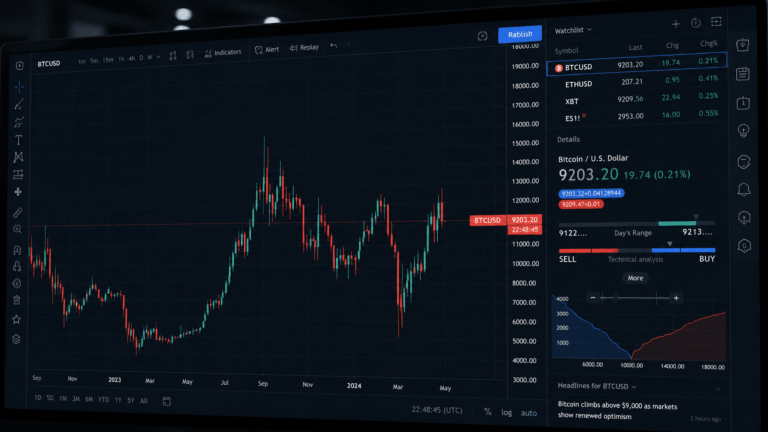
What is Block Trade? TEJ will introduce you to it from the ground up?
Block Trade, a crucial element of the financial markets, refer to the buying and selling of securities in substantial single transactions. These trades, typically carried out by institutional or large investors, involve a multitude of stocks, bonds, or other financial instruments. Their staggering volume and value characterize them and are often conducted outside the open market to mitigate excessive impact on market prices. TEJ will guide you through this crucial aspect of the financial world.