News

Discover TEJ’s latest product updates and events.

Trending News

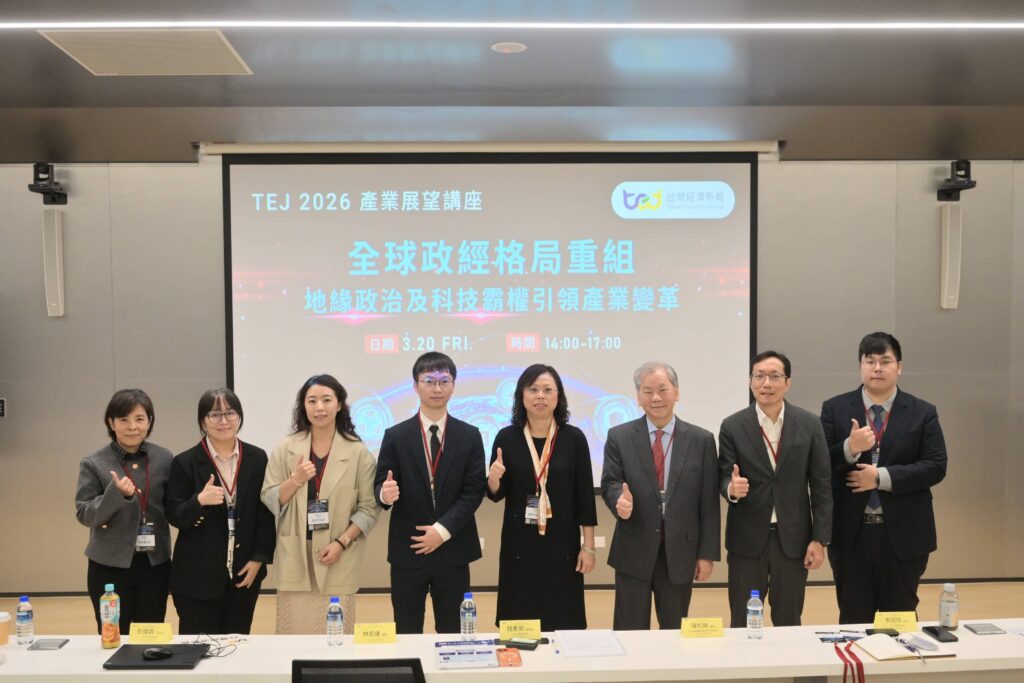
TEJ 2026 TCRI Industry Outlook Seminar: Geopolitics and Technological Dominance Driving Industrial Transformation

TEJ held the “TCRI 2026 Industry Outlook Seminar” on March 20, offering an in-depth analysis of how the rapidly changing global political and economic landscape is affecting Taiwan’s industries and creating new development opportunities. The seminar also explored how the rapid evolution of AI is shaping a polarized development pattern in Taiwan’s electronics industry.  The seminar covered a broad range of macro-level topics, including the impact of the Middle East conflict on the international political and economic environment, the challenges and transformation faced by traditional industries amid geopolitical tensions, and how Taiwan’s electronics industry is diverging into two distinct development trajectories under the AI trend. The seminar aimed to provide Taiwan’s industrial sector with a clearer roadmap for future development.

Private: Earning Call Transcripts

Earnings call transcript provides an AI-generated, structural text data solution for Taiwanese corporate earnings calls. By transforming unstructured MOPS audio into searchable text, it enables researchers to execute text mining, sentiment analysis, and keyword tracking. This product bridges corporate qualitative disclosures with quantitative financial research, empowering quantitative funds and analysts to capture market-moving insights efficiently.

News

Tag: Factor Investing
Product Introduction[改去product list]

Factor Library – Taiwan’s Factor Dataset for Quantitative Investing

TEJ Factor Library provides a comprehensive set of pre-calculated quantitative factors designed for the Taiwan equity market. TEJ Factor Library covers over 100 localized factors across 11 major categories, enabling investors and researchers to efficiently conduct factor-based analysis, backtesting, and strategy development. Unlike raw data inputs, TEJ Factor Library delivers ready-to-use signals, significantly reducing the time required for data cleaning, factor construction, and alignment.

more